In this guide
- Why the Red Sea is the world’s best shark diving destination
- The sharks — 7 species you can encounter
- The sites — Brothers, Daedalus, Elphinstone & more
- Best time of year for each species
- Boreas — private luxury charter for dive groups
- 4, 5 & 7-night shark diving charter packages
- Pair your dive trip with a luxury Egypt land tour
- Science, conservation & ecology partners





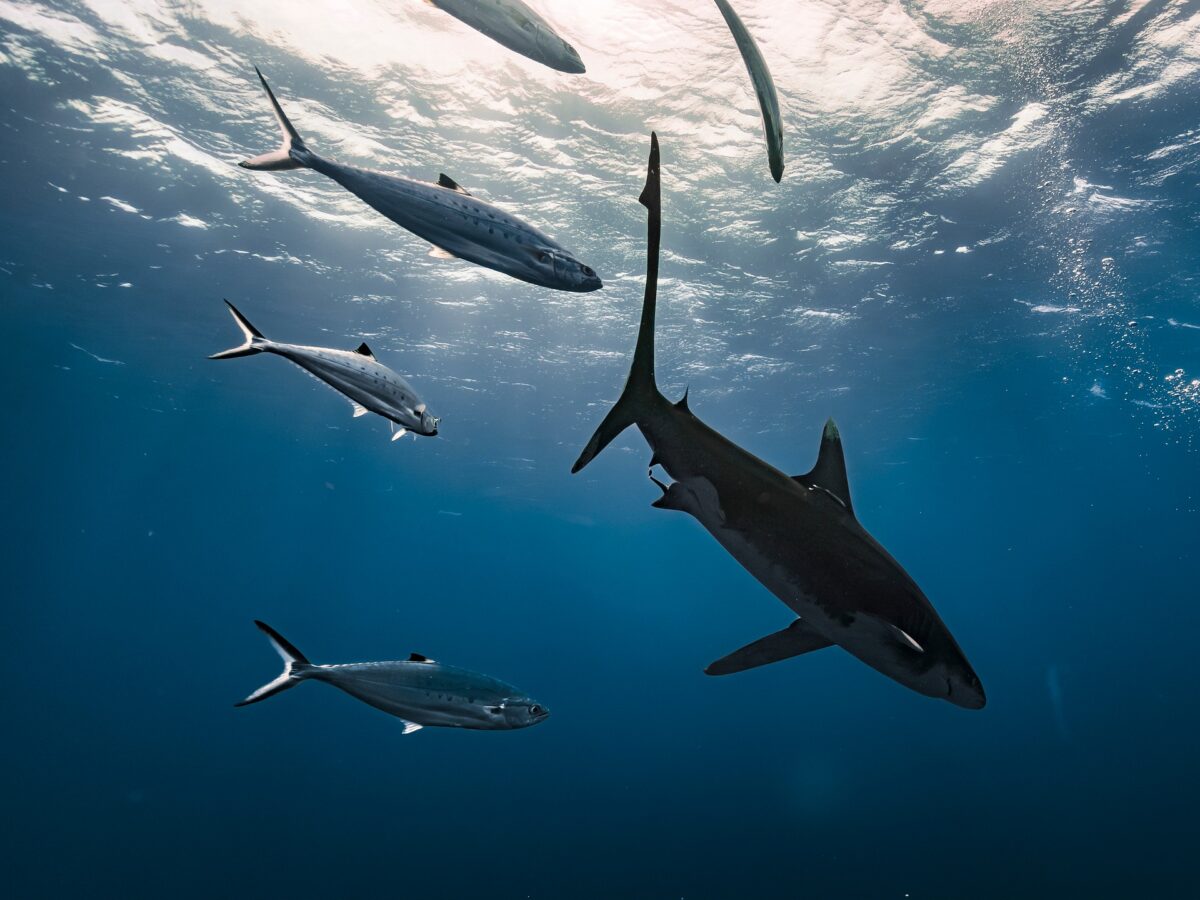
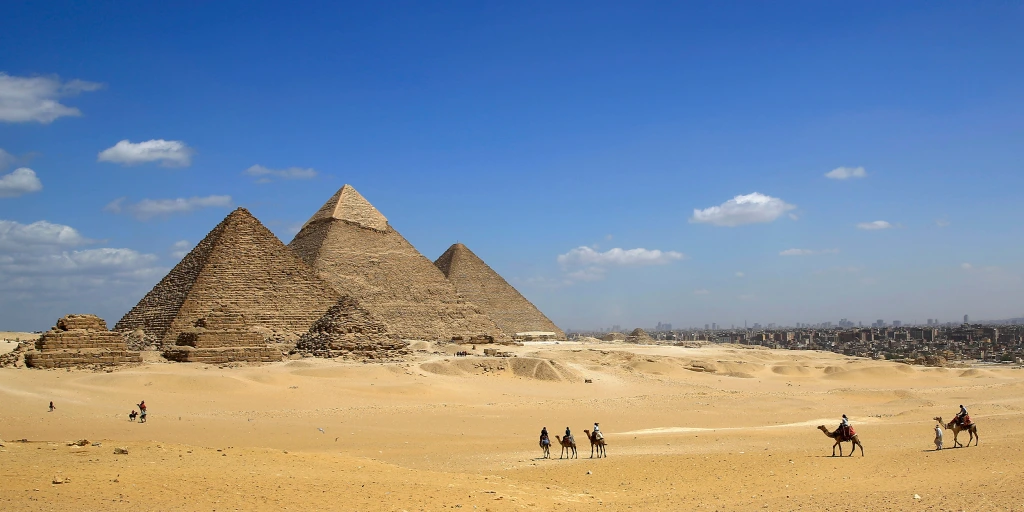
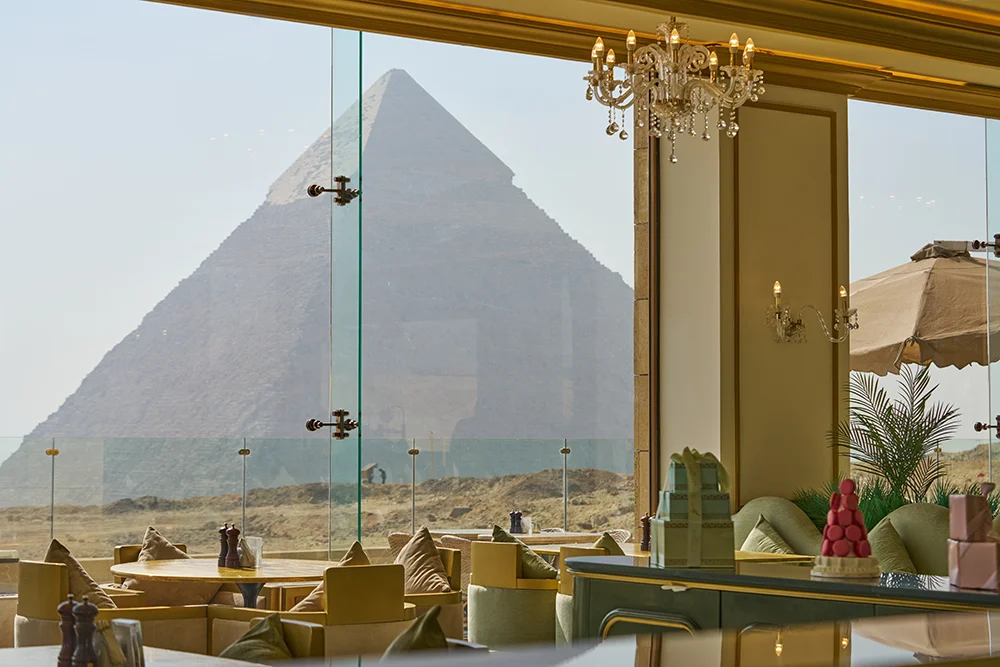
Boreas on the Red Sea · the Pyramids of Giza · dinner at Ladurée on the Pyramids Plateau · boreascruises.com
Why the Red Sea Beats Everywhere Else for Shark Encounters.
Divers who have been to the Maldives, the Galápagos, and the Coral Triangle all say versions of the same thing about the Red Sea: it’s different. Not just better in certain respects — different in kind. The combination of visibility, species diversity, encounter frequency, and the sheer accessibility of remote offshore reefs is something no other destination fully replicates.
Brothers, Daedalus, Elphinstone — three offshore reefs in a single expedition. Oceanic whitetips, schooling hammerheads, threshers, silvertips, and grey reef sharks. On a good trip, five species in a single day. These reefs are only reachable by a vessel that stays offshore overnight.
The water is semi-enclosed, hypersaline, and almost entirely free from runoff — giving the Red Sea clarity that regularly reaches 40 metres at the best shark sites. The offshore reefs of the central and southern Red Sea rise from depths of 500 to 800 metres, creating the upwelling currents and nutrient density that attract pelagic predators year-round. These are not occasional visitors. These are resident populations that have adapted to these specific reefs over generations.
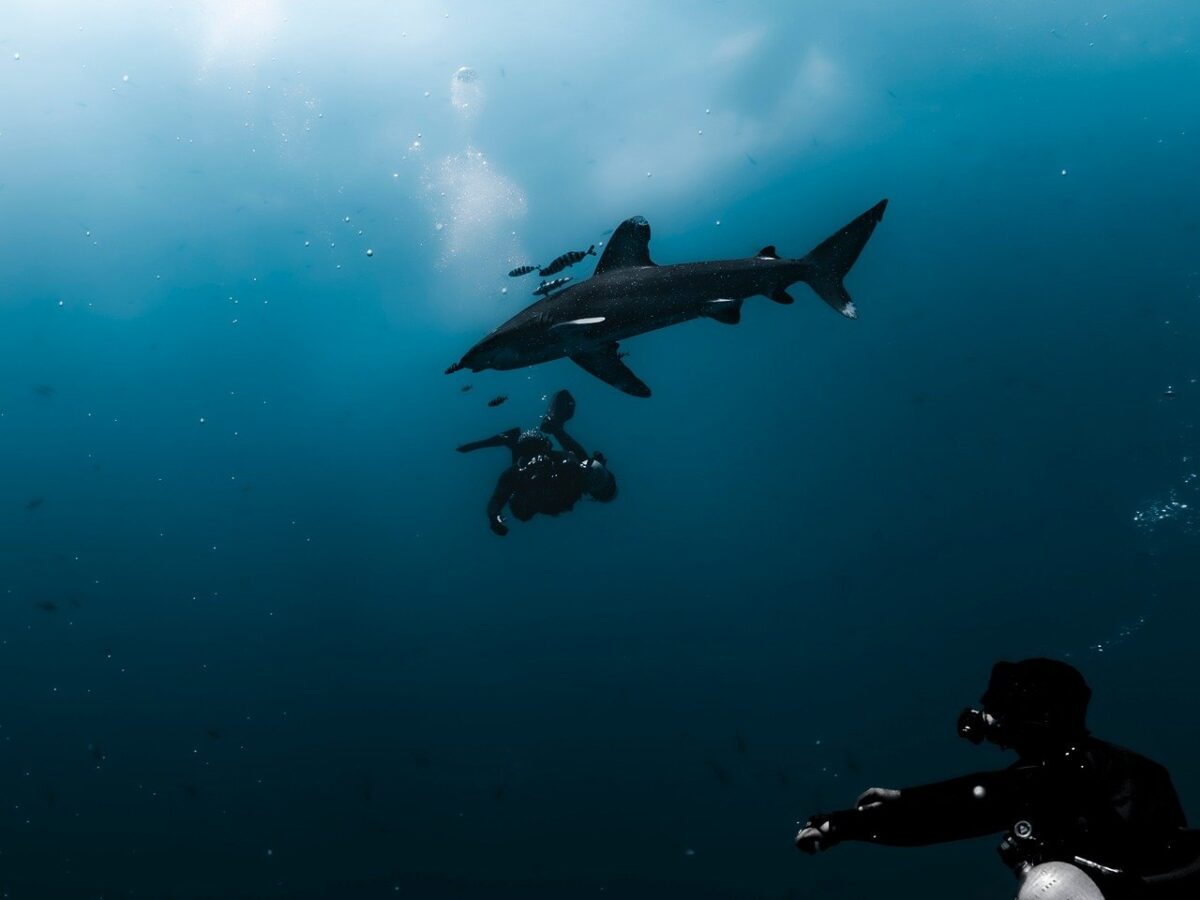
The serious shark encounters happen at Brothers, Daedalus, and Elphinstone — remote sites 50 to 90 km offshore that are only reachable by a vessel that can stay out for multiple nights. This is where a private Boreas charter provides access that day boats simply cannot match.
The Seven Sharks of the Red Sea — A Field Guide.
The Red Sea hosts more shark species than almost any other accessible diving destination. Here are the seven species that experienced divers plan their entire trip around.
Bold, inquisitive, and one of the most electrifying encounters in diving. Recognizable by their broad, rounded fins tipped with white. They approach slowly and deliberately, often circling at close range. Unforgettable in open blue water above a drop-off.
Dozens, sometimes hundreds, schooling in the blue at a current-swept wall. They gather at cleaning stations in the early morning. The silence required to observe them makes the experience intensely meditative. One of the most visually spectacular things in diving.
Identified instantly by their extraordinary elongated tail — as long as their body. Deep-water sharks that rise to cleaning stations at dawn. Patient divers who descend early and wait quietly are rewarded with extended encounters. One of the most beautiful sharks in the ocean.
A powerful, graceful pelagic species found at the offshore reefs of the central Red Sea. Silvertips are the apex residents of the Brothers Islands — territorial, confident, and reliably present. They often circle dive groups at mid-water, providing sustained photographic opportunities.
The Red Sea’s most unpredictable encounter — documented at Abu Dabbab and the offshore walls of Elphinstone. Sightings are not common but are increasing at monitored sites. When they appear, the encounter is unforgettable.
The most commonly seen shark in the Red Sea — present at virtually every reef. Elegant, swift, and endlessly photogenic. The reason many divers fall in love with Red Sea diving. Reliable encounters from the very first dive, even at coastal sites near Hurghada.
The world’s largest fish visits the Red Sea seasonally, drawn by plankton blooms. Entirely harmless filter feeders. Snorkeling or diving alongside a 10-metre whale shark in 40-metre visibility is one of the most extraordinary experiences in marine wildlife.
The constant companions of every Red Sea dive. Found resting under coral overhangs, patrolling shallow lagoons, and cruising reef edges at dusk. Ideal for first shark encounters and underwater photographers looking for relaxed, cooperative subjects at close range.
Planning a shark diving expedition?
Tell us your dates and group size — we respond within 24 hours with a tailored charter proposal.
The Five Great Shark Diving Sites of the Red Sea.
The offshore reefs of the central and southern Red Sea are where the serious encounters happen. Here is every site that matters — with honest assessments of what to expect and how to access them.
| Site | Location | Shark Species | Level | Boreas Access |
|---|---|---|---|---|
| Brothers Islands (Big & Little Brother) |
Central Red Sea, 60km offshore | Oceanic whitetip, hammerhead, thresher, silvertip, grey reef | Advanced | ✦ Overnight only |
| Daedalus Reef | Central Red Sea, 90km offshore | Scalloped hammerhead (schooling), oceanic whitetip, thresher, manta | Advanced | ✦ Overnight only |
| Elphinstone Reef | 30km off Marsa Alam | Oceanic whitetip (90% encounter rate), hammerhead, tiger (occasional) | Advanced | ✦ Overnight preferred |
| Rocky Island & Zabargad | Deep South Red Sea | Hammerhead schools, grey reef, silvertip, thresher | Advanced | ✦ Overnight only |
| Ras Mohammed National Park | South Sinai tip | Grey reef, whitetip reef, blacktip, occasional hammerhead | All levels | Day boat possible |
Brothers, Daedalus and Elphinstone — the BDE route — can only be properly dived from a vessel that stays offshore overnight. Day boats simply cannot reach these sites effectively. A private charter on Boreas is the only way to experience all three in a single expedition.
The Shark Diving Calendar — Which Species, Which Month.
The Red Sea does not have a single “shark season” — different species peak at different times, which means there is genuinely no bad time to dive here. The question is which species you most want to see.
Boreas — The Private Luxury Charter for Serious Divers.
There is a fundamental difference between booking a cabin on a shared liveaboard and chartering Boreas as your group’s private vessel. On a shared boat, you adapt to the program. On a private Boreas charter, the entire vessel, crew, itinerary, and experience is built entirely around your group.
On a private Boreas charter, your group dives when you want to dive. Early morning descents at Daedalus — when the hammerheads are at their cleaning stations — require a 5am wake-up and 5:30am entry. On a shared boat, this is rarely possible. On Boreas, it is standard.
Marine-grade steel, multiple deck levels including sun deck, dive deck with full equipment rinse stations and camera facilities, and a resort-level living space. Egypt’s first luxury floating resort built specifically for this standard of expedition.
Experienced dive guides with deep knowledge of the BDE route and shark behaviour. Dive briefings tailored to your group’s level. Nitrox for certified divers. Camera rinse stations, dedicated camera facilities, and equipment storage on board.
Private suites and cabins, all en-suite, air-conditioned, with natural light. Full charter groups of 10–48 guests get the entire vessel. No shared spaces with other guests — ever.
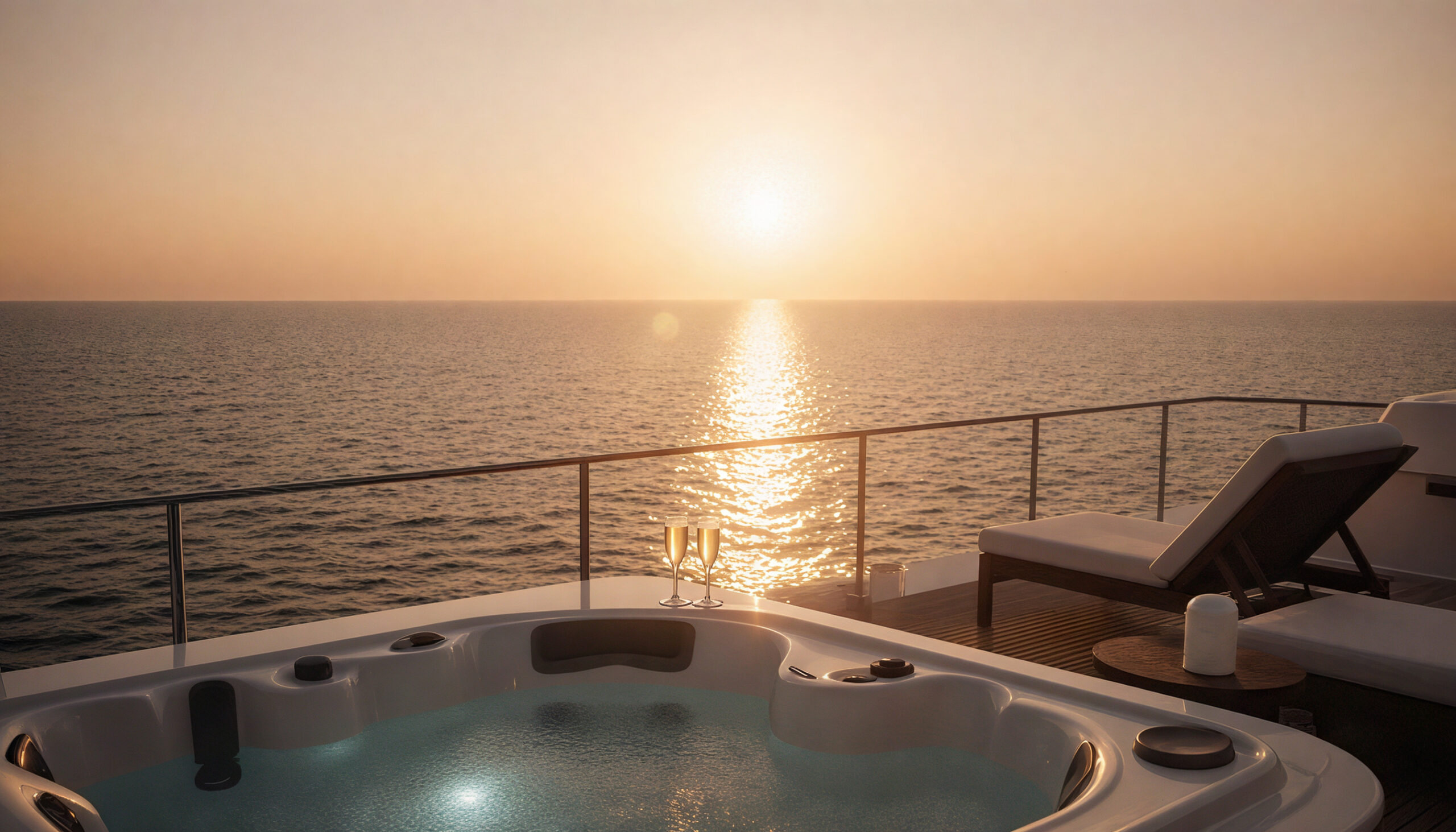
Full spa, 2 jacuzzis, floating sea pool, gym with sea views, water slide, gourmet Mediterranean dining, live music evenings, cocktail hour at sunset. When your group surfaces from Elphinstone, this is what’s waiting.
4, 5 & 7-Night Shark Diving Expeditions Aboard Boreas.
Three shark diving charter structures, each designed around a specific diving objective. All three are fully private — the entire vessel, exclusively for your group. All include PADI dive guides, full equipment, nitrox, and the complete Boreas resort experience between dives.
Pair Your Shark Diving Expedition with Ancient Egypt.
The most extraordinary dive trips to the Red Sea are the ones that begin or end with a few days on land. The Pyramids are 45 minutes by air from Hurghada. Luxor — home to the Valley of the Kings and the greatest concentration of ancient temples on earth — is one hour from Cairo. The Red Sea and ancient Egypt are not two separate trips. They are two chapters of the same extraordinary journey.
Fly into Hurghada, board Boreas at Port Ghalib. Complete your shark diving charter. Transfer to Cairo by air. Begin the Icons of Egypt land tour — Pyramids, GEM, Valley of the Kings, Luxor. Fly home from Luxor or Cairo.
Fly into Cairo. Complete the Icons of Egypt land tour. Transfer to Port Ghalib (45-min flight or 4hr road via Marsa Alam). Board Boreas for your shark diving charter. Fly home from Hurghada.
Every cruise offers the opportunity to actively contribute to reef protection, shark science, and local community support — your expedition leaves something behind.

Coral health monitoring programme. Guests collect live reef data during dives — observations submitted directly to UQ’s global database.
Divers contribute species and behaviour observations to global shark population research on every charter. Your sighting data matters.
Dive briefings include shark conservation education. Guests leave with grounded understanding of Red Sea shark behaviour, status, and threats.
Reef mooring compliance, waste protocols, and diver education on every charter — in active partnership with HEPCA, CDWS, and international marine science associations.
No anchoring on living reef. Single-use plastic eliminated from all catering. Marine awareness sessions on selected evenings — open to all guests aboard.
Tell us your dates
and your group size.
We respond within 24 hours with a tailored shark diving charter proposal — the right itinerary for your level, your species priorities, and your timeline. With or without the Egypt land tour.