Is Egypt Safe for
Women Traveling
Alone / in a Group?
Yes — and millions of women visit every year. Here is what to actually know before you go, from people who have operated on the Red Sea for over 20 years.
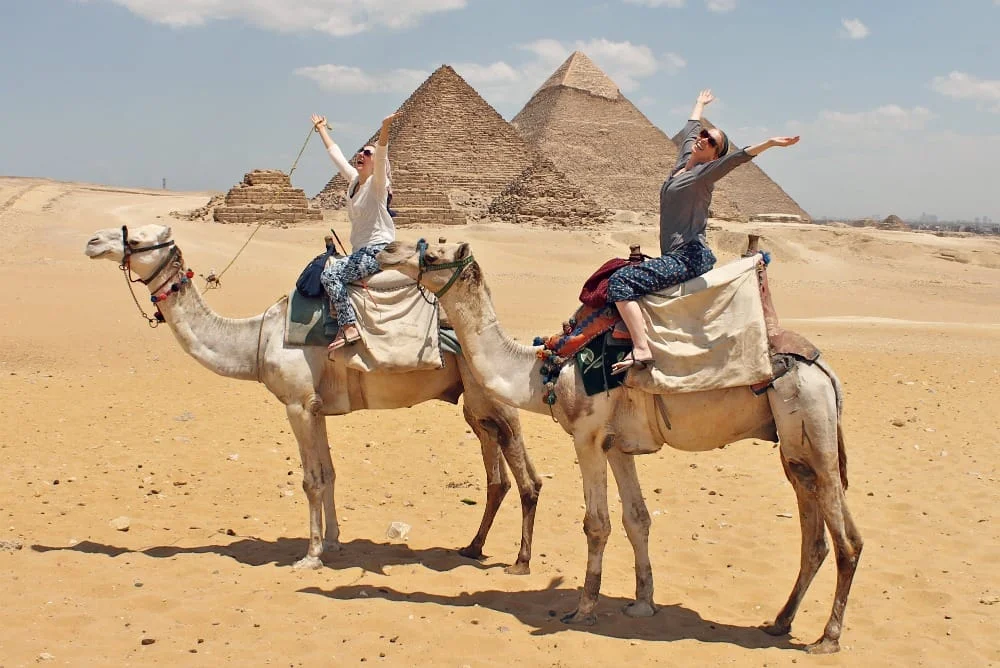
Private camel ride at the Pyramids of Giza — one of the signature moments of the Boreas Icons of Egypt land tour
The real numbers —
what the data shows.
Egypt receives far more tourists than most Americans realise. The country’s entire economy is built around welcoming international visitors safely — and the track record reflects that.
Egypt is rated Level 2 — Exercise Increased Caution — the same rating as France, Germany, and the United Kingdom. It does not indicate a dangerous destination. Tourist corridors including Cairo, Luxor, Aswan, Hurghada, and the Red Sea coast carry no specific warnings.
Dedicated Tourism Police operate at every major archaeological site, airport, hotel corridor, and tourist route in Egypt. Their sole function is the safety of international visitors. Egypt’s tourism industry employs millions of people. The country has every structural incentive to protect it.
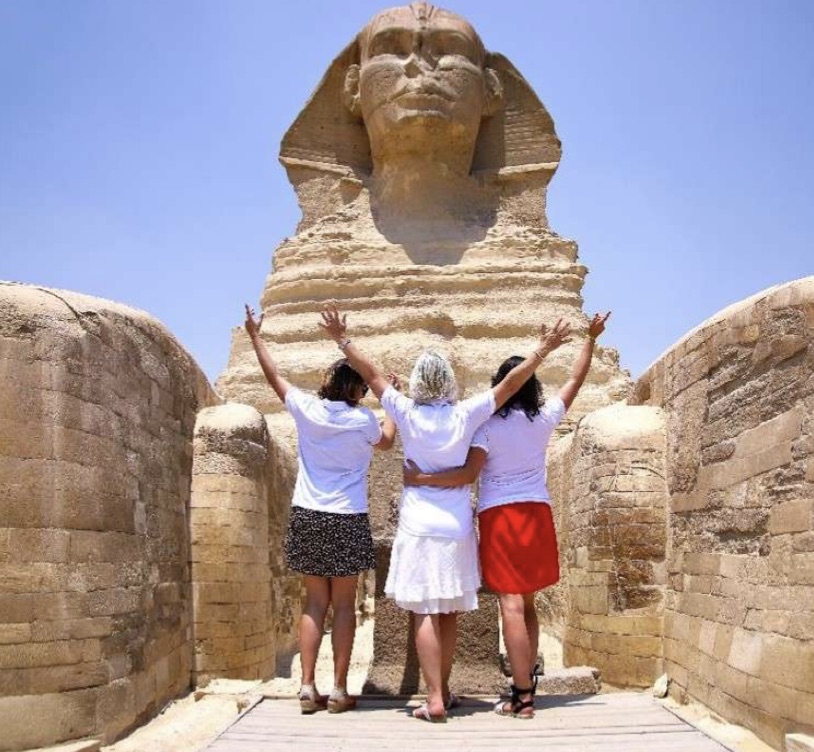
Private visit to the Sphinx at Giza — part of the Boreas Icons of Egypt land program
What to wear in Cairo,
Luxor and the Red Sea.
Dress code is the question most women ask first — and the answer is simpler than most guides make it. Egypt is two very different environments, and each has its own norm.
Cover shoulders — one simple rule
In cities, restaurants, markets, and temples: cover your shoulders. A light linen scarf works perfectly — worn loosely, it handles the heat and the cultural expectation simultaneously. Locals genuinely appreciate the respect. You will also feel more comfortable navigating busy areas when you are dressed in a way that draws less attention.
No rules — complete freedom
At Red Sea resorts and on private boats: there are no dress restrictions whatsoever. Bikinis, sundresses, shorts, whatever you would wear in Miami or Tulum — completely normal. The Red Sea resort environment is fully international. On a private Boreas vessel, your group sets the dress code entirely.
✦ 2–3 light linen scarves: temple and market cover, doubles as a beach wrap on the boat
✦ Loose linen or cotton trousers: comfortable in heat, appropriate everywhere in the city
✦ Standard resort and swimwear: fully appropriate at Red Sea resorts and on the vessel
✦ Comfortable closed shoes: temple floors are uneven; some areas require removing footwear
✦ High-SPF sunscreen: Egyptian sun is intense year-round, especially on open water
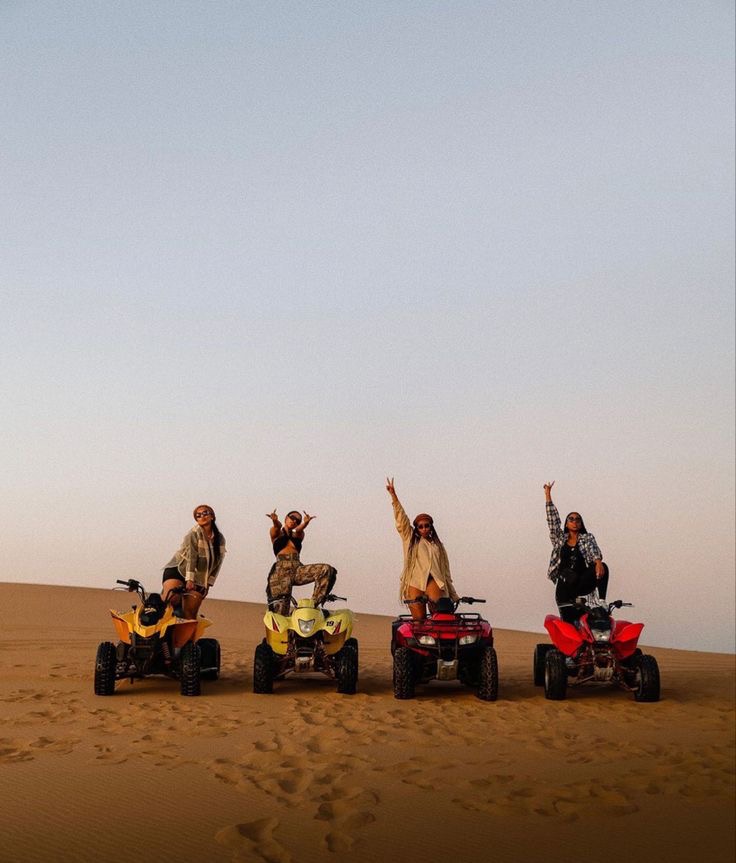
Exploring Egypt’s ancient sites privately — no shared groups, your own guide, your own pace
Solo vs. private group —
same destination,
different experience.
Both are safe. The experience is genuinely different — and it is worth understanding why before you decide how to go.
Solo travel in Cairo is absolutely doable — but it takes navigation, confidence, and street-level awareness that not everyone wants to manage on vacation. On a private curated group program, none of that friction reaches you. Every detail is handled before you land.
Solo female travelers in Egypt manage their own airport arrivals, negotiate transport, handle vendor pressure at major sites, and make daily logistics decisions in an unfamiliar environment. Many women do this successfully and love the experience. It requires preparation and confidence.
On a private group program with Boreas, the logistics architecture is different entirely. Pre-arranged private transfers meet you at the airport. A licensed Egyptologist guide accompanies every site visit. Vetted restaurants are pre-selected. No public negotiation, no street-level pressure, no decisions about getting from A to B. The experience is what is left when the friction is removed.
✦ Airport navigation and transfer pressure on arrival
✦ Vendor and tout pressure at major sites like the Pyramids
✦ Transport negotiation in Cairo, Luxor, and Aswan
✦ Uncertainty about restaurant safety and hygiene standards
✦ Strangers in your group — every traveler on a Boreas program is in your party
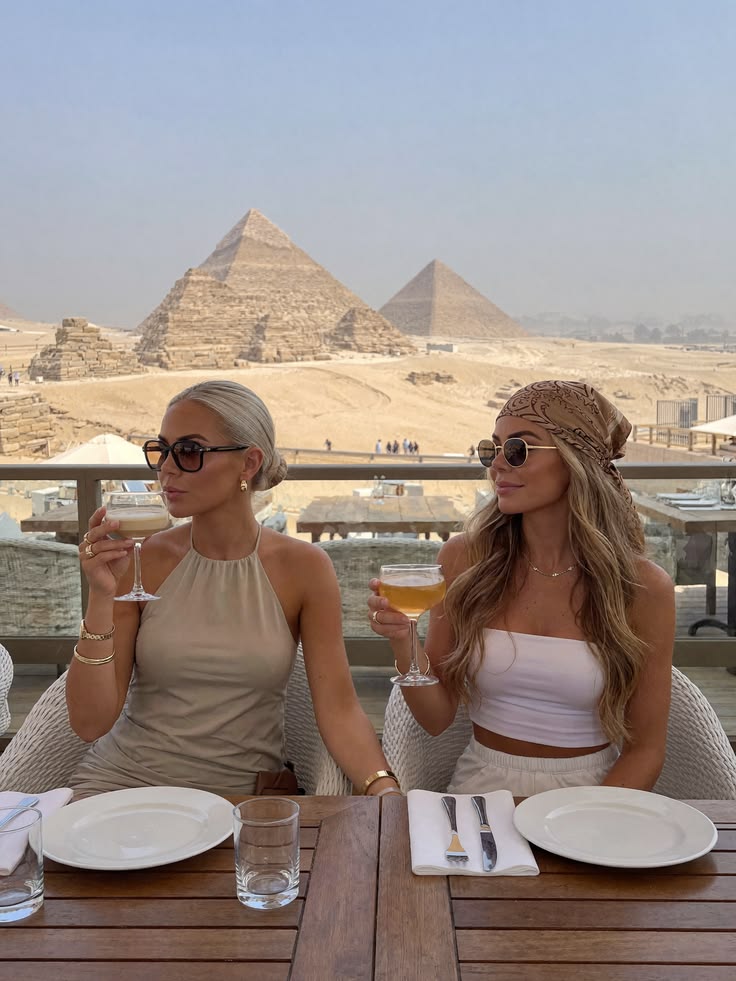
Private group travel in Egypt — every detail handled before you land
What a private Boreas
program looks like
for your group.
Boreas designs private Egypt journeys for groups who want the country’s extraordinary experience without the variables that make independent travel demanding. Here is what a private program includes.
Private Egyptologist at every site
No shared group tours. No strangers joining your visit. A licensed Egyptologist guide — privately assigned to your group — accompanies every temple, tomb, and museum visit. They bring the history to life in a way a shared tour cannot, and they manage every interaction with site staff and vendors on your behalf.
5-star and boutique — handpicked
Every hotel in a Boreas program is handpicked for quality, security standards, and guest experience. Properties include Four Seasons Cairo, Mena House at the Pyramids, Sofitel Winter Palace in Luxor, and Sofitel Old Cataract in Aswan. These are not generic hotel bookings — they are the finest addresses in Egypt, each chosen for a specific reason.
All transfers private — airport to temple
Every transfer in a Boreas program is private and pre-arranged. Airport arrivals, inter-city journeys, temple to hotel. Air-conditioned vehicles with experienced drivers. No public transport, no negotiation, no uncertainty. Where distances warrant it, domestic flights are used instead of long drives.
Fully custom — your pace, your priorities
Cairo, Luxor, Aswan, and the Red Sea — in the order and at the pace that suits your group. No fixed departure groups, no schedule set by strangers. If your group wants an extra morning at Karnak or a slow afternoon on the Nile, the itinerary accommodates it. This is your Egypt, not a shared program’s version of it.
Your private superyacht
on the Red Sea is
yours exclusively.
The Red Sea portion of a Boreas program is a fundamentally different environment from urban Egypt — and it answers almost every safety concern a woman might carry into the trip.
No other guests. No public deck. No shared schedules. The entire vessel — crew, cabins, dining, and activities — is dedicated to your group for the full duration of the charter. Nobody joins. Nobody rotates through. The boat is yours.
The Red Sea resort environment itself — Hurghada, Marsa Alam, and the open water — operates as a fully international zone. Women who arrive from Cairo frequently describe the shift as dramatic: the resort areas are relaxed, modern, and welcoming in a way that feels closer to Miami or the Maldives than anything their image of Egypt suggested.
On open water, the experience is complete freedom. No dress norms, no vendor pressure, no street navigation. Snorkeling at private reef sites, yoga on the deck at sunrise, sunset from the jacuzzi. The Red Sea delivers the physical and sensory decompression that makes the land program’s intensity worthwhile.
✦ Egyptian Coast Guard certified — full vessel, crew, and safety equipment certification
✦ CDWS accredited — Chamber of Diving and Watersports: all water activities certified
✦ HEPCA affiliated — all marine activity follows Red Sea conservation standards
✦ PADI professionals on board — certified dive instructors for all underwater activities
✦ Crew fully vetted — dedicated to your group only, no rotation of outside staff
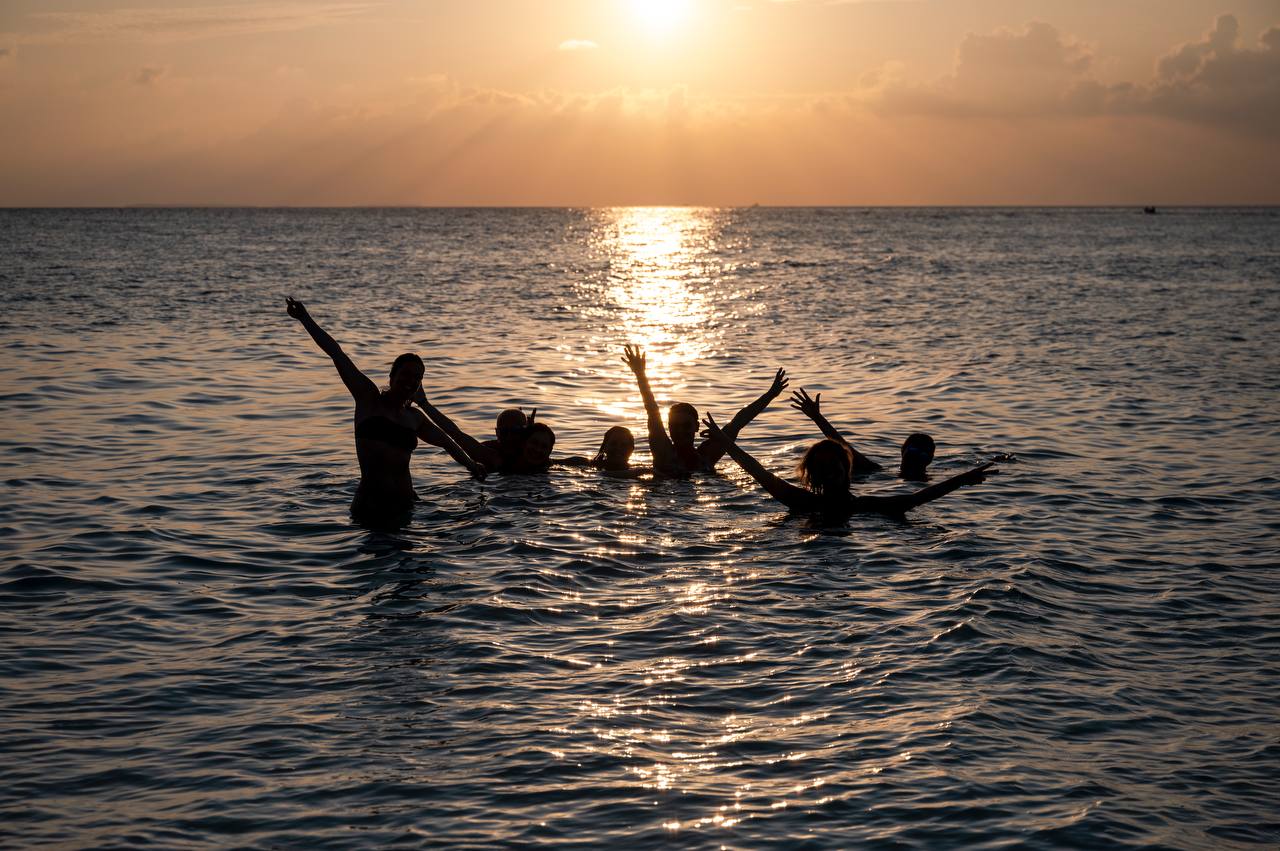
Boreas on the Red Sea — your private vessel, your group only, complete freedom on the water
What women who have
been to Egypt actually say.
These are not curated marketing quotes. They are the consistent observations that women share after traveling in Egypt — solo and on private programs.
“I had far more positive experiences than negative ones. I would return without hesitation.”
“The Egyptian people genuinely want you to love their country — no strings attached.”
“Hurghada felt like an international bubble — completely relaxed, a world apart from anything I had read about Egypt.”
The pattern across women who travel Egypt independently: the experience is extraordinary, the logistics require awareness, and the Egyptian people — particularly outside the tourist industry — are consistently warm and welcoming.
The pattern across women who travel Egypt on private programs: the logistics disappear entirely, and what remains is one of the most extraordinary destinations on earth delivered exactly as it should be.
Questions women ask
before booking Egypt.
Is Egypt safe for women traveling alone?
Yes. Egypt is safe for solo female travelers, though it requires cultural awareness and confidence — particularly in Cairo. 8.9 million tourists visited in 2025 with a 99.97% incident-free rate. Tourism Police operate at every major site. The primary challenges are persistent vendors and unsolicited attention in urban areas, not physical danger. Private guided programs eliminate most of this friction entirely.
Is Egypt safe for a group of women traveling together?
Yes — group travel in Egypt is very safe, particularly on a private curated program. With pre-arranged transfers, vetted guides, and no public navigation required, women in private groups report a fundamentally smoother and richer experience than solo travel. The Red Sea portions are fully international environments with no restrictions.
What should women wear in Egypt?
In Cairo, Luxor, and Aswan: cover shoulders in restaurants, markets, and temples. A light linen scarf works perfectly. At Red Sea resorts and on private boats: no dress rules apply. Bikinis, sundresses, and resort wear are completely normal — the same as any international resort.
Is the Red Sea safe for women?
Yes. Red Sea resort areas like Hurghada and Marsa Alam are fully international environments — monitored, modern, and relaxed. On a private superyacht, the experience is entirely your group’s: no public deck, no shared schedules, no strangers. Women consistently describe the Red Sea as the most comfortable part of the entire Egypt journey.
What is the US State Department travel advisory for Egypt?
Egypt is rated Level 2 — Exercise Increased Caution — the same rating as France, Germany, and the United Kingdom. Tourist corridors including Cairo, Luxor, Aswan, Hurghada, and Sharm El Sheikh carry no specific warnings. The Level 2 designation covers border regions far from tourist areas, not the destinations that visitors travel to.
Do I need to wear a headscarf in Egypt?
No. Foreign women are not expected to wear a headscarf in Egypt. Covering your shoulders in religious sites and markets is appreciated — a light scarf over the shoulders is sufficient. Headscarves are not required at temples, restaurants, hotels, or resorts.
How do I get to Egypt from the US?
EgyptAir operates direct flights from New York JFK, Newark, Washington DC year-round. A new direct Los Angeles to Cairo route launched in May 2026, and a Chicago to Cairo direct route launched in June 2026. Cairo to Hurghada is a 45-minute domestic flight. All airport transfers to the Boreas vessel are included in the program.
Private Egypt programs
for groups who travel
with intention.
Every Boreas program is private, fully guided, and built around your group’s priorities. Land only, sea only, or the complete combined journey.
7-Night Egypt Sea & Land Journey
Temples, Pyramids, Valley of Kings — then the Red Sea. The only trip of its kind.
View Program →Icons of Egypt Land Tour
Cairo, Pyramids, Luxor, Valley of the Kings. Privately guided, 5-star throughout.
View Land Tour →Red Sea Golden Express
Dolphins, reefs, island BBQ, spa, live music. Three nights aboard Boreas.
View Cruise →Have more questions?
We answer every one —
honestly.
Boreas has operated on the Red Sea since the early 2000s. We design every program so the logistics never reach you — and the experience does. Ask us anything.
info@boreascruises.com · boreascruises.com · Response within 24 hours